


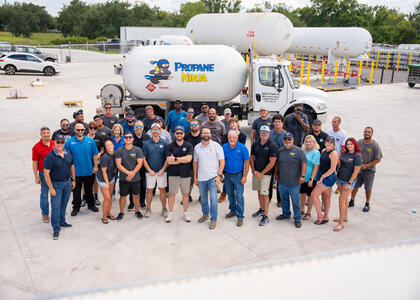


To survive, the propane industry must grow. Our customers deserve strong, independent companies that can successfully take on their business without failing them. Sustained aggressive organic propane company growth is possible. As the cofounder of Propane Ninja, I have learned firsthand how to achieve growth and navigate the challenges that come with it.
When my business partner, Mike Dodd, and I started our propane company in 2013 with no more than a pickup truck and $5,000 in cash, we had no idea the growth journey we were about to embark upon. As industry outsiders, we had to learn how to operate in our industry from scratch. That meant learning hard lessons but also allowed for an out-of-the-box approach to building a propane business.
I believe there are three key lessons we learned and three key challenges we have had to overcome that will help any company achieve rapid, sustainable growth.
3 Lessons for Sustainable Company Growth
The following takeaways from our experiences growing a propane business can provide a framework for intentionally building your company’s processes and internal philosophies.
Lesson 1: Sales-Focused
In our very early years, we never had the infrastructure, employees or assets our competition had. Instead, we had a simple philosophy that drove us forward. We knew if we went out and made sales, the revenue would support our operational needs.
In those early years, if we were not physically delivering tanks, we would be spending the entire day knocking on doors and selling our propane tank delivery service. Those early repeat customers were the foundation of a recurring revenue stream we could build upon year after year.
Too many companies focus on their current operational constraints and only take whatever business happens to come through the door. To have truly sustained growth beyond your competition, you need to invest in your sales team and make new business development a major segment and focus of your company.
Lesson 2: Intentional Growth
While being sales-focused is essential, it does require discipline. Sustainable growth does not happen by accident. To grow successfully and consistently requires proactive planning of exactly how much you want to grow your business. I recommend looking at the total market share of your service area and recognizing a realistic amount of that market that could be yours.
Then, I recommend looking at your different divisions and deciding which sectors best fit your business (return on investment, operational efficiency and customer stickiness should all be deciding factors).
Next, calculate how much growth you could afford based off either your appetite for debt or current free cash flow you can put toward new assets. Once you have calculated your growth goal, work backward on how many additional customers you will need to sign up on a weekly basis and ensure you hire the right number of salespeople that can consistently bring in this business.
One of the most common issues I see among smaller, family-owned propane companies is neglecting to invest in actually building a sales team that can consistently bring in new customers. Without intentional investment in sales capacity, growth remains unpredictable and heavily dependent on market conditions, rather than strategy.
Lesson 3: Continuous Learning
Because we started out with no industry knowledge, we had to rapidly learn and soak up as much information as we could on how a successful propane company operates.
Thankfully, we had incredible mentors along the way, including Gardner and Billy, the owners of Countryside Propane. Besides learning from them directly, Gardner also took us as guests to our first National Propane Gas Association Southeastern & International Propane Expo, where we learned more about how companies of all sizes across the country were operating.
We also began to get involved with our local state association, where we learned more about our local challenges and opportunities.
Third, we always kept our eyes and ears open to other industries and attended conferences, trade shows and trainings to learn what best-in-class companies were doing. Through our growth, we have maintained this involvement in both our industry and learning from others.
If a propane company does not get involved in either the state or local level, I can say they are missing out on opportunities that could benefit their growth.
3 Challenges From Growth
Aggressive growth can be a boon, but it is not without its challenges. The following three challenges demonstrate pitfalls to avoid on your way to sustainable growth.
Challenge 1: Outpacing Your Resources
Avoid outpacing your resources too far. Unmanaged growth can surpass your equipment capacity, labor capacity and, most importantly, your cash flow.
This is where the intention in lesson two of planning your growth must include estimates of the equipment needs, operational requirements and debt service or cash requirements, along with projected revenues.
Thankfully, the average propane customer will be with you for many years, and if you can accurately estimate their demand using historical data, then you should have no problem creating a pricing model that accounts for both the increased revenues and increased costs. Ensure your sales team operates within the parameters of the pricing model and you will be able to steer clear of major danger.
Challenge 2: Maintaining Connection
In our early years, we knew each and every one of our customers. We also had strong relationships with each person on our small team. However, as you continue to grow and delegate tasks, there will inevitably be a challenge in keeping that connection with your customers, as well as with your employees. No longer can you be involved in all areas of the business at once, and you must create systems and processes of communication both internally and externally.
We implemented a system called the Entrepreneurs Operating System six years into our business, and the best practices and guidance were pivotal in creating internal sustainability in facing the challenges from constant growth and the changes it brings.
At one point, the volume of calls we received on a daily basis grew so substantially that we implemented a third-party answering service. After about a year of this, we learned it was negatively impacting our customers’ experience. We quickly pivoted to hiring additional support staff and having our team members answer the phone calls in our office.
The lesson we learned was that maintaining a human connection with your customers is key. As you grow, that will set you apart from the larger competitors.
Challenge 3: Outgrowing Your Abilities
The largest challenge I have faced with rapid growth has been the constant shifting of what the business demands from me as a leader. In the early years, I was actually doing the sales, delivering the product, billing the customer and more, myself.
As the company grew, I had to take on new roles and learn new skills to be able to continue meeting the needs of the business.
This is where lesson three of continuous learning is so fundamental. You will not be able to grow your business successfully without upgrading your own skill set of both technical and leadership abilities. Stagnant companies are often run by owners or managers who have convinced themselves they have nothing left to learn, while growing companies have leaders who thrive in the discomfort of new demands.
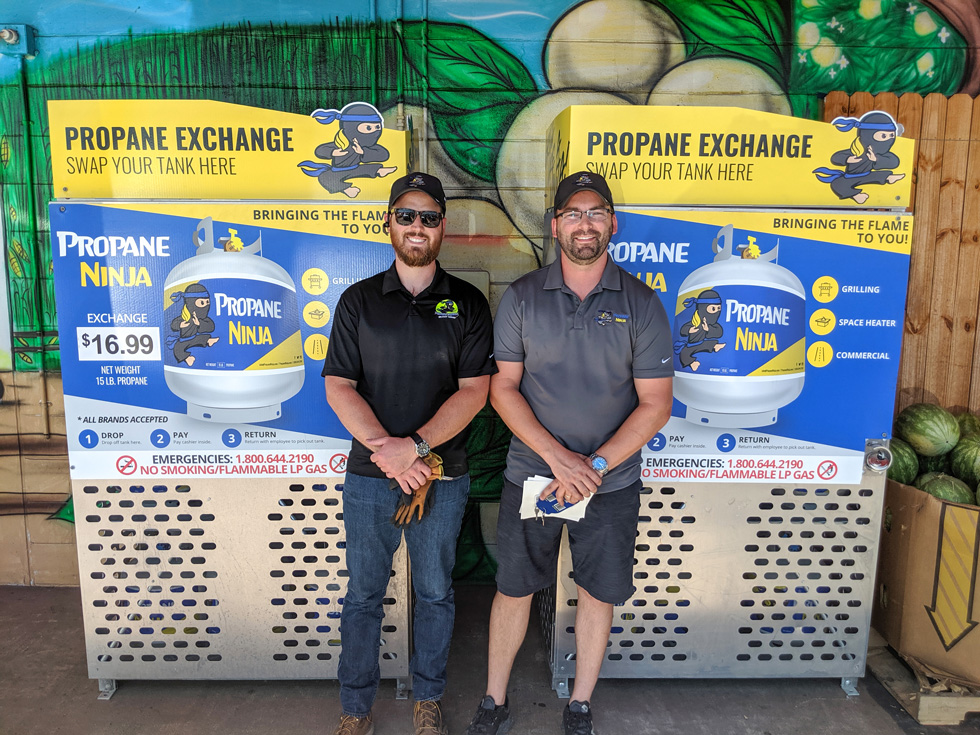 As owners and managers, we must be sure to take time to work on the business and not just in the business. This challenge also applies to staff in all positions. There may be some team members who were suited for a role at one size but not when the company is three or four times larger. Constant reevaluation of your team to ensure the right people are in the right seats is essential. Often, moving someone from a role that has outgrown them means setting them and your company up for success.
In closing, I would challenge all those leaders in our industry to take ownership of the growth of your business and accept that a higher level of growth is possible. There will be challenges with higher growth, but with the right resources, mindset and people, you can experience far greater growth and success.