
Propane Equipment Financing in 2026: An Equipment Finance Playbook
How to present the financial health of your company to lenders, reduce friction & speed up approvals
In 2026, propane marketers will be operating in a lending environment where interest rates are expected to decline from late 2025 levels, shaping decisions around propane equipment financing in 2026. While forecasters agree on this downward trend, they point out that market volatility is still possible, depending on inflation and other economic indicators.
In general, lenders are still cautious about long-term risk but will continue to actively fund, especially when the request is tied to core propane titled assets like bobtails and crane trucks. Banks are still the low-cost option but often come with more covenants and longer decision timelines. Independents and specialty lenders will finance tanks, bulk storage, tank monitors and software, in addition to titled assets that are favored by banks.
The biggest shift, however, is not access to capital. It is the emphasis on well-organized and -explained credit packages. The money is there, but sloppy files, missing information and unclear stories will slow the approval process. In 2026, the propane marketers that win the best pricing and quickest approvals will be the ones that treat credit packages as a core discipline.
Build Your 2026 Capital Expenditure Budget
Before you talk with any lender, build a simple, disciplined capital plan for the new year.
1. Start with a full inventory and equipment life-cycle review. For each category, note the age, condition and maintenance requirements:
- Fleet: bobtails, crane trucks, transport trailers, service vehicles, etc.
- Customer tanks: sizes, uses, inventory vs. deployed
- Storage: bulk storage
- Technology: tank monitors, routing/dispatch, mobile tablets, back-office software, etc.
2. Next, prioritize by return on investment and risk:
- Safety and compliance
- Department of Transportation compliance, leak risk, regulator and relief valve age, etc.
- Revenue-producing assets
- Tanks deployed = customers = demand = revenue
- Bobtails drive gallons
- Tank monitors reduce runouts
- Routing software increases delivery efficiency
3. Match structure to asset life:
- Loans and one-dollar buyout/capital leases: Best for long-life assets where you’ll use the asset well past the finance term
- Fair market value/true leases: Strong fit for technology and assets where residual value is uncertain or refresh cycles are short
- Terminal rental adjustment clause leases: Often ideal for titled vehicles with predictable resale value
- Subscriptions and managed services: For software and technology with flexibility and built-in upgrades
Pro tip: Consider seasonal payments. Watch lead times and progress payments. Align term with refresh cycle.
Who is Funding What in 2026?
In 2026, understanding the different lenders and their strengths and weaknesses is as important as understanding interest rates.
1. Banks:
- Typically a lower cost of funds
- More covenants and financial reporting
- Slower review process
- Tend to prefer larger, more complex ticket sizes or full relationship banking, including real estate
2. Independent finance companies:
- Faster credit decisions (often application-only approvals)
- Deep familiarity with propane and energy assets
- Strong fit for small- to midsize tickets
- Competitive pricing, especially where story and collateral are strong
3. Private credit/specialty lenders:
- Handle niches, unique structures, sponsor-backed deals
- Useful for large programs, mergers and acquisitions, or untraditional risk profiles
- Pricing is on a case-by-case basis
- May require an equity position
Pick the partner whose process and structure match your deal type, not just the one with the lowest quoted rate. Think about transaction size, asset type and timing when making your decision.
Pro tip: Compare the entire package. The lowest interest rate may not be the lowest cost package. (Look out for origination fees, floating interest rates and interim charges.)
The Underwriter’s View
The fastest approvals come when there’s a clear story and a complete credit package. They want to see how your propane business makes money, where volatility shows up and how the new equipment supports that cash flow.
1. Know your business:
- For gallons sold over the last three years, be able to explain increases and decreases
- Current size of fleet
- Split of customers by commercial/residential/agricultural/etc.; additional detail for customers responsible for greater than 10% of revenue
- Ability to explain factors behind anomalies in the financials (i.e., negative retained earnings, increase in cost of goods sold and revenue changes)
- Ability to explain other business practices (i.e., hedging philosophy)
- Ability to explain specific tax, cash flow or accounting needs
2. Be able to explain why you need the equipment:
- Replacing older equipment
- Planning for future growth
- Upgrades to make business operations more efficient
3. Red flags that trigger kickbacks and delays:
- Stale or missing financial statements
- Incomplete owner information or unclear ownership percentages
- Any explanations that lack clarity
Sample Financial Requests & Suggested Approaches
The structure of your financial request — and the details that should be included — depend on the nature of what you are requesting financing for.
Here are samples of common requests:
1. Fleet Upgrade
Sample script: “We are replacing three high-mileage units to reduce unscheduled downtime and improve delivery efficiency. The new units will support projected 2026-2028 gallon growth of X% and allow us to retire trucks that have increasing maintenance and safety risk.”
Important to include:
- Vendor quotes with make/model, vehicle identification numbers (VIN), specs and delivery timelines
- Fleet inventory listing showing current miles/hours and planned retirements
2. Technology Modernization (Tank Monitors + Routing Software)
Sample script: “We are deploying tank monitors and upgrading to a routing/dispatch platform to reduce runouts, optimize delivery routes and consolidate nonrevenue service calls. The technology will allow us to shift from ‘degree-day guesswork’ to data-driven scheduling.”
Important to include:
- Vendor quote with unit counts, fees and implementation timeline
- When you ask to finance technology, translate features into measurable savings: fewer emergency calls, fewer runouts, higher average drop size, lower overtime and fewer miles driven per delivered gallon
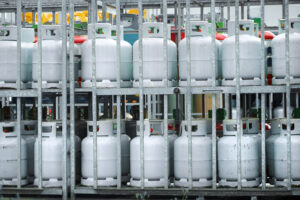
3. Tanks
Sample script: “We’re expanding our customer base by purchasing and setting additional tanks to fuel new account growth. Owning the tanks increases retention and control. This initiative supports projected 2026-2028 gallon growth of X% for a tricounty expansion.”
Important to include:
- Vendor quotes and/or purchase orders showing tank sizes (e.g., 120-, 250-, 320-, 500-, 1,000-gallon), new versus refurbished, quantities and expected delivery schedule
- Inventory list showing owned tanks in service, spare tanks, tanks in refurbishment, average age/condition and any planned retirements
- Expected new accounts/conversions, estimated average annual gallons per account and margin assumptions
Asking for Seasonal Payments
Winter is when cash floods in; summer is when you reinvest in plant, fleet and technology. If you’re asking for seasonal payments, tie that directly to your historical cash flow and gallons delivered.
Sample script: “Our cash flow is highly seasonal, with the majority of margin earned between November and March. To keep coverage ratios strong and avoid stress in low-gallon months, we’d like to structure payments seasonally.”
Important to include:
- Comprehensive historical cash flow performance report
OUR DIGITAL PARTNERS