

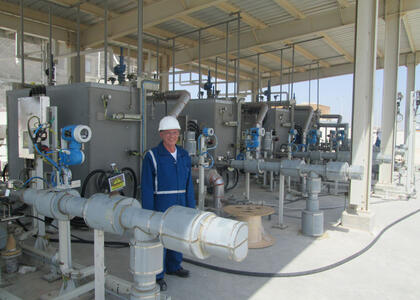


While it’s true that, like most other industries, the propane industry has changed substantially over time, reflecting on the propane industry’s past 50 years also shows that some things have remained relatively similar.
Donald Fernald can make that call, because he’s literally seen it all over that time period as president and CEO of Superior Energy Systems in Columbia Station, Ohio, outside of Cleveland.
He and his team — including son-in-law Derek Rimko, vice president of operations — have collectively seen the highs and lows over the last half-century, from the growth of propane autogas as a vehicle fuel to the founding of the Propane Education & Research Council in 1996 and to the impact of the infamous 2014 propane shortage. On July 4, 1975, a firm called Plant Systems Inc. was founded, later to be purchased by Superior Energy Systems in 2002 and ultimately bought by Fernald two years later. What have been the industry’s biggest highlights during that time?
Turns out many things, but two in particular stand out to Fernald.
“Autogas was an evolution,” said Fernald, who in the early 1970s owned a Cadillac powered by propane. “The industry did not embrace the autogas market until the 1990s with the equipment that made it feasible, and we are continuing to witness autogas become a reliable alternative fuel.
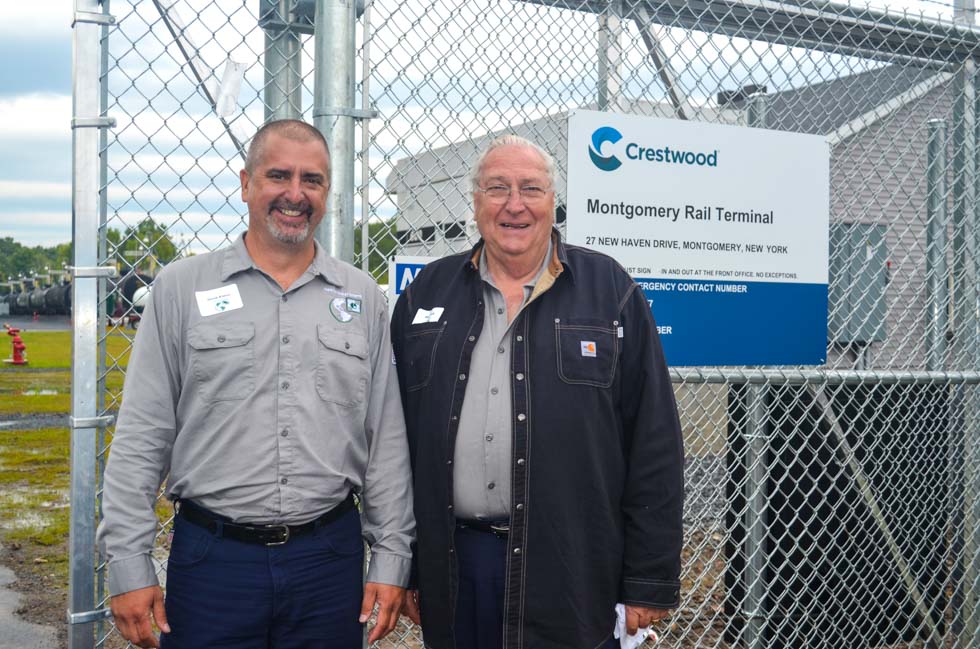
“We have also watched the midstream market become a bit saturated by an influx of rail terminals,” he added. “We covered a large part of the propane supply need through those terminals and are now seeing more smaller-sized terminals and some shift to transloaders for testing markets.”
Reflecting on the Propane Industry’s Past 50 Years — Relationships Matter
Then, as now, the relationships forged from participation in industry organizations helped build Superior Energy Systems.
Mike Walters, vice president of safety and fleet at Superior Energy Systems and a propane industry hall of fame member, started his propane career in 1979 with PARGAS and joined Plant Systems in 1998 after a stint working for AmeriGas. Fernald recruited him and asked him to move to the Cleveland area to write risk management programs. The two had met at a National Propane Gas Association risk management task force meeting.
One of the biggest industry advancements since then — and from the 1970s on — was safety, said Walters. He became the national training manager for AmeriGas in 2004 after a short stretch with Horizon Propane and returned to Superior Energy Systems in 2012 as its safety director.
“I think the industry was less efficient safety-wise when Plant Systems began,” Walters said. “We really were reduced to on-the-job training. Back in the 1970s, there were no programs like CETP [certified employee training program], and the guidebook series was not widely used. There was no methodical way to train people.”
Once CETP was created, there still was no training vehicle for the industrial operators. In 1999, Plant Systems created a training program for the industrial customers called Gas System Operator. At the time, the real industry focus was on compliance and equipment like emergency shutoff valves and pull-away protection. Because of this, there may have been some safety incidents that could have been avoided, Walters said, adding that “today, while compliance and equipment are critical, safety is about the people and their ability to make good decisions.”
“Education was an issue,” he said. “There is a distinct difference between education and training. Training is telling someone to do something, but we really started educating people on how to do things safely by telling them why.”
Rimko joined Plant Systems in 1993 and became part owner of Superior Energy Systems in 2004 along with Fernald and late industry hall of fame member Bill Young. He said that installing propane air plants for peak shaving in order to get lower curtailment rates for natural gas was a big market then, along with peak shaving for urban areas.
“Now that natural gas is generally cheaper, the market has shifted some,” Rimko said. “We still see propane used for curtailment, but it is also used as a backup plan for companies that are faced with grid instability. We are also seeing propane become a viable source of heat and power in rural areas, where warehouses or data centers are popping up and natural gas is unavailable.”
Autogas Growth
Greg Whitesel, director of engineering at Superior Energy Systems, who joined Plant Services in 1999 when he was still in college, agreed with Fernald that autogas has been a major growth area for the industry and for Superior Energy Systems.
“It was always there, but was never as big as it is now,” Whitesel said. “I didn’t think it would be as big as it turned out to be. Bill Young always had cars that ran on propane, but we didn’t think much about it.”
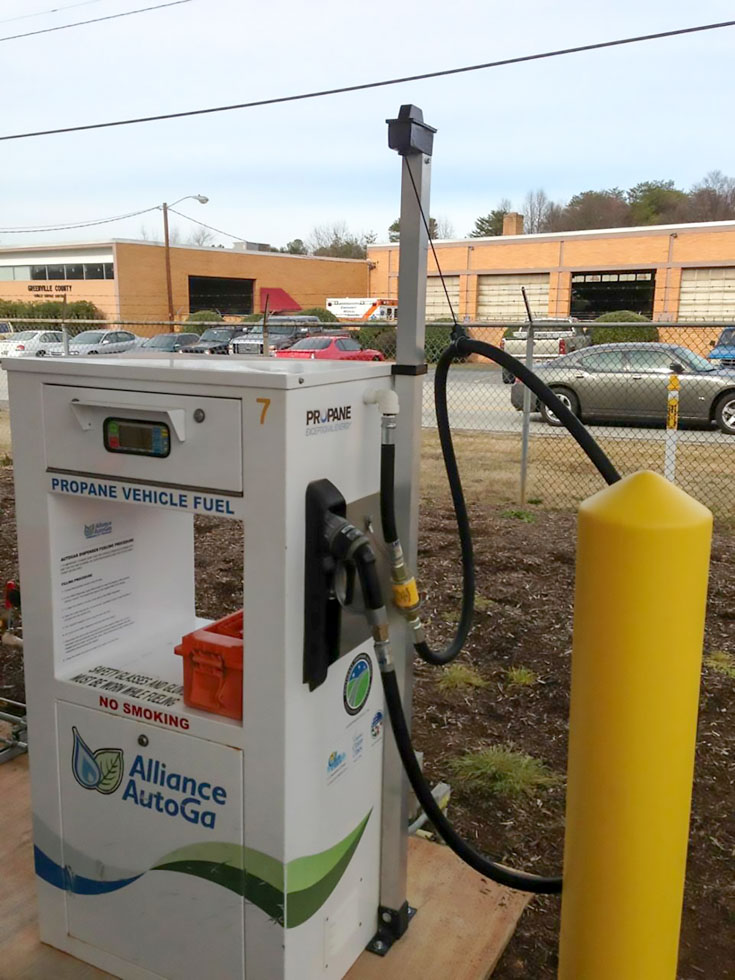
Fernald said Superior Energy Systems built its first propane autogas dispenser in 2007, prompted by Blossman Gas.
“Blossman asked us to do an autogas job for Metro Cars in Michigan, and we took two used Gilbarco units and remanufactured them for propane, and that’s what started it,” Fernald said. “In 2008, we built the first cabinet that resembles what we build today.”
Rimko said that at its outset, propane autogas didn’t actually do well. He had his doubts when the technology resurfaced in the 2000s.
“Technology has come so far, which has helped,” Rimko said. “Autogas has remained a consistent business for us, and we often have autogas jobs turn into larger construction builds with canopies, multiple tanks or specialized equipment to meet the fleet’s needs.”
Walters said “autogas was a big highlight a couple of times” in the industry’s history. “It was actually really popular in the 1980s,” he said.
“It was called ‘motor fuel’ back then, and company cars at so many propane companies ran on propane. This dwindled in the 1990s. The resurgence of autogas [began] in the early 2000s with the first school bus chassis and refueling dispensers, which resembled gasoline and diesel dispensers and revolutionized the industry.”
Today’s Challenges & the Future
One of the biggest challenges Walters sees today for the propane industry is the push for electrification, which ties back to climate change and ultimately a “lack of understanding about what that means and how propane can play a part. The perception of propane and education will always be a challenge, but we have so many more tools to address this in 2026.”
Whitesel and Rimko agreed that workforce development is also an issue today. Whitesel said identifying employees that want to work in a niche business, such as welders and service technicians, is challenging.
The turbulent economy and tariffs are also an issue, Rimko said. Propane tanks that used to cost under $30,000 are now near $100,000. Vaporizers and mixers are also more expensive, which strains the ability of the industry to be competitive with other options.
Fernald agreed that the economy has impacted autogas dispenser sales, and the “electrify everything” movement is prompting municipalities and school districts to give that technology a try. But there may be a silver lining.
“We do think we will see a wave of fleets turn back [to propane], and already have,” he said. “Autogas is another challenge, because a lot of propane company vehicles still aren’t converted to propane. Technology has advanced to the point where it provides the best conversion systems, but we still need a large part of our industry to embrace and support it.”
Despite today’s challenges, Fernald agrees the propane industry is entering a period rich with opportunity. With advanced autogas technologies, new opportunities in AI-driven data centers and growing demand for reliable, low-carbon energy in rural markets, he feels the industry is positioned to remain an essential part of America’s energy mix.
“We are doing our part by embracing the innovation and educating the next generation of workers and customers so the next 50 years can be even stronger,” he said.