
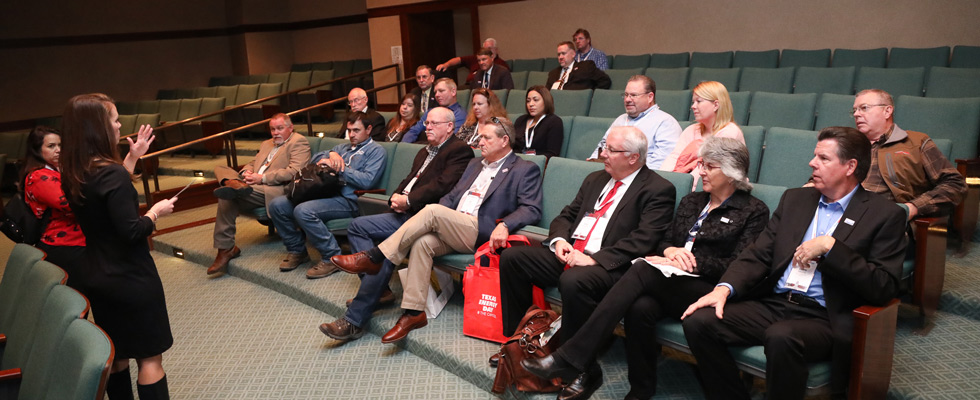
The Woman Making Waves in the Alternative Fuel Sector
Superior Energy Systems’ Crystelle Markley reflects on the role of propane autogas as an effective alternative fueling choice
Propane autogas — an alternative fuel solution — occupies an often hard-to-define space. Though autogas is a vibrant offering in propane’s diverse portfolio, many in the propane industry focus their time and efforts on more traditional applications: heating, cooking, outdoor living, etc. At the same time, propane autogas systems often qualify as clean, environmentally friendly solutions — with many even being certified by the California Air Resources Board. Yet, when people hear “clean energy,” propane likely isn’t the first thing to come to mind.

For those who delve into such things, they will find that propane autogas is an innovative and surprisingly effective alternative fuel that continues to grow in its popularity, especially among companies and organizations that employ fleets in their daily operations. The rise in its popularity can be at least partially credited to Crystelle Markley, marketing director at Superior Energy Systems (SES).
Markley works tirelessly to advocate for the increasingly innovative alternative fuel and the various equipment that makes the drop-in fuel viable for potential customers.
BPN reached out to Markley to hear more about her role and the latest autogas equipment trends shaping the future of propane autogas.
Can you describe your history in the alternative fuels space? What have been the major developments in this sector since you have been involved in it?
Markley: I started in alternative fuels right out of graduate school in 2006 and have been in the industry ever since. My undergraduate degree in agribusiness helped me secure my first job, which was with an engine and infrastructure manufacturer that was primarily focused on ethanol at the time, which was gaining traction in the [alternative] fuel market. My boss at the time drove an SUV that was completely wrapped like a corn cob — ha. Ethanol popularity began to decline due to environmental doubts, technological disappointments and changing energy priorities. That company had a history in propane as well and ended up evolving quickly in the autogas space. It was the first to bring certified propane autogas refueling dispensers to the fleet market and simultaneously brought several OEM-partnered vehicle platforms from GM and Freightliner Custom Chassis to market that ran on liquid propane injected engines. The autogas wave began to take hold in 2009, when the company helped launch the first propane school bus, which turned out to be the most popular autogas vehicle ever built thanks to the multitude of benefits the fuel provides to school districts. I think helping to launch that school bus as well as bringing other OEM-partnered propane vehicles to market are at the top of the major developments in the past 20 years. It was a full-circle moment when my son was riding a propane school bus home every day. I also was part of the team that secured a multimillion-dollar contract with UPS to provide liquid propane-injected engines for 1,000 step-van delivery trucks as well as equipment for 50 refueling locations across the U.S., which was a huge step forward for autogas in the fleet world. That UPS fleet was expected to travel more than 25 million miles and displace over three million gallons of conventional gasoline and diesel per year. I joined SES in 2017, and in addition to learning the midstream and industrial propane markets, I’ve watched autogas refueling evolve significantly, and the equipment now offers virtually every characteristic of traditional fleet refueling.
What is propane’s role in the alternative fuels space? Are there any particular advantages of propane autogas compared to other fuels?
Propane plays a critical role in the alternative-fuels space because it offers a solution that is both practical and available today. While many alternative energy technologies are still developing infrastructure or vehicle platforms, autogas is widely accessible and easy for fleets to adopt. One of the biggest advantages is cost. Autogas costs approximately 40% less per gallon than gasoline or diesel, which can translate into significant long-term fuel savings for fleets and organizations, sometimes seeing a return on investment in a matter of months. The infrastructure is also significantly cheaper than the alternatives. Another key benefit is energy security. Propane is domestically produced in the United States, which helps shield it from many of the geopolitical disruptions that can affect global oil markets. That domestic supply makes it a reliable and stable energy option for transportation, and fuel contracts allow fleets to lock in their per-gallon price for multiple years. Propane is also a cleaner-burning fuel than gasoline or diesel, producing fewer emissions and helping fleets reduce their environmental footprint without sacrificing performance. For many organizations looking to balance sustainability goals with affordability and reliability, autogas offers a proven and practical alternative fuel solution today.
How have recent changes at the federal legal, regulatory and/or funding level impacted the autogas industry?
SES prides itself on having all of our equipment certified to the highest intent in North America. Weights and measurements, Canadian Standards Association (CSA) and Underwriters Laboratories (UL) requirements are constantly changing, and we have an engineer on staff who is tasked with the challenge of keeping up with and influencing those changes. The de-escalation of Environmental Protection Agency regulations has recently made propane more competitive in the alternative fuels market and SES is working with industry groups to take advantage of some of those new funding opportunities.
What are the greatest benefits of women taking bigger roles in fuel industries, including the alternative fuel industry?
I would say both propane and the fuels industries were traditionally male dominated, but that has steadily changed over my 20 years. I’ve had the opportunity to see more women step into leadership, operations and strategic roles. I think one of the strengths women often bring to the industry is the ability to manage multiple priorities; this business requires constant coordination between safety, logistics, customer relationships and regulatory considerations, among other things. Women tend to be natural multitaskers and problem-solvers, which can be a real advantage in an industry where adaptability and organization are critical. Our manufacturing foreman and autogas service director at SES are both females and play key roles in our company success. Seeing more women succeed in this space is exciting because it reflects how much the industry has evolved, and I believe it’s helping position propane for a more innovative and dynamic future.
What role does networking and communications efforts play in sectors that rely on technologies and products that often incorporate newer, innovative product offerings?
Networking and communications are essential, not only for reaching customers and end users but also for ensuring propane retailers fully understand the products and applications that are now driving propane demand. Many of the newer propane technologies, from autogas vehicles to industrial power generation, have the potential to consume hundreds of thousands of gallons of propane annually. For retailers, understanding how these products work and the value they bring allows them to confidently market and sell those solutions to their own customers. When the industry is equipped with the right information and messaging, they can identify new opportunities, grow their businesses and ultimately sell more gallons of propane. Being actively involved in industry organizations and working groups as well as state propane gas associations has always been a priority for SES. The collaboration efforts allow companies to share knowledge, stay informed about new technologies and work together to move the industry forward. Even in the digital world, in-person events such as trade shows, conferences and association meetings remain incredibly valuable as well. These gatherings create opportunities to build relationships with customers, exchange ideas and form partnerships that help accelerate the adoption of new propane technologies and strengthen the industry as a whole.
Can you describe your role in the Texas Propane Gas Association? How did you become involved in this role and where have you seen the most impact from your work in industry organizations?
I have been active in the Texas Propane Gas Association (TPGA) for almost 20 years, serving on multiple committees and have chaired the legislative committee since 2021 as well as serving on its Propane Council of Texas board, which is dedicated to educating the public and the propane industry on the newest clean-burning propane technologies. I worked for a Texas congressman in Washington, D.C., between undergraduate and graduate school and have always had a passion for politics and policy. I served as a teaching assistant in the agriculture policy department at Texas A&M during graduate school as well, which grew my knowledge and passion for legislative education. Working alongside the TPGA staff to translate hundreds of legislative bills per session that can affect the propane industry is challenging and rewarding and I believe the retailers have a true appreciation for our work and how it plays into their business. I enjoy being able to use what I have learned at SES regarding propane technology and my history in policy to make a difference to the vast TPGA membership, and I am thankful to work with such a strong industry organization.
Where do you believe the greatest opportunity for propane autogas is going forward (particular markets, sectors, possible innovations, etc.)?
SES created its first propane autogas dispenser in 2010, and since then we have worked hard to keep pace with changing market demands. One of the most important areas has been technology, which I believe has helped open many new opportunities for propane as an alternative fuel. This year at the NPGA Expo in Nashville, we are introducing a completely redesigned dispenser based directly on feedback from fleet operators. Improvements like this demonstrate how the industry continues to adapt to remain competitive with other fuel options in the fleet market. The school bus market remains autogas’ “bread and butter,” but the availability of more propane-powered vehicle options is making it easier for industries like delivery, municipal services and shuttle transportation to consider propane as a practical alternative. A major milestone for SES was reaching more than 100 million gallons of fuel pumped through our line of PRO-Vend 2000 dispensers that subscribe to our fleet management network, a few years ago. Achievements like this highlight the real-world impact autogas can have by displacing millions of gallons of gasoline and diesel. When you consider the environmental and economic benefits associated with that level of fuel displacement, it makes me optimistic about the continued growth and future of autogas — and propane in general.
OUR DIGITAL PARTNERS