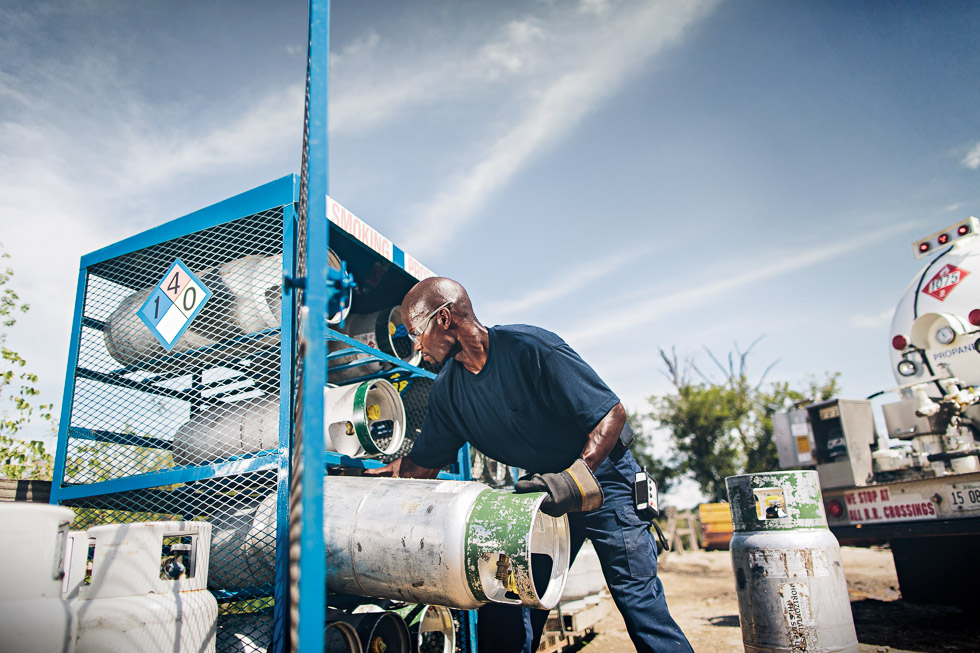
Why the Prefill Inspection Matters for Propane Safety
Prefill inspections help identify potential hazards & ensure cylinders are safe for continued service
In the propane industry, educating employees on safe work practices is the No. 1 priority. Ensuring employees return home every day to their loved ones in the same condition as they arrived at work is the only acceptable standard.
Achieving that goal relies on building and maintaining a strong safety culture where proper training, strict adherence to procedures and attention to detail are part of every task performed.
While filling procedures often receive the most attention, the prefill inspection is just as critical. It is the first, and perhaps most important, step in protecting employees and customers. A thorough prefill inspection is not simply another box to check; it is one of the most effective safeguards the industry has put in place.
As a manufacturer of pressure cylinders, Worthington Enterprises stresses the importance of following proper protocols for the safe storage, handling, transportation and use of liquid propane gas and systems outlined by the National Fire Protection Association (NFPA). These rules have been put in place to protect employees and the consumer, as well as to prevent catastrophic outcomes.
NFPA 58, also known as the “Liquefied Petroleum Gas Code,” requires that any company filling pressure cylinders with propane must properly train all employees on safe work practices, the health and safety hazards of propane, and emergency response procedures. In addition, companies are required to provide supervised on-the-job instruction and also assess each employee’s ability to perform their assigned duties.
From driving a bobtail full of fuel or in cylinders loaded on a truck, to filling or withdrawing fuel from a cylinder, to making stationary installations, all employees should be familiar with the guidelines outlined in NFPA 58.
Prefill Inspection: It’s More Than a Quick Glance
The first key step is knowing how to determine whether a cylinder is suitable for continued service. Regardless of the cylinder’s material, age or application, no cylinder should be filled until it has been verified to be properly marked within the qualification window and free from conditions that could negatively impact safety.
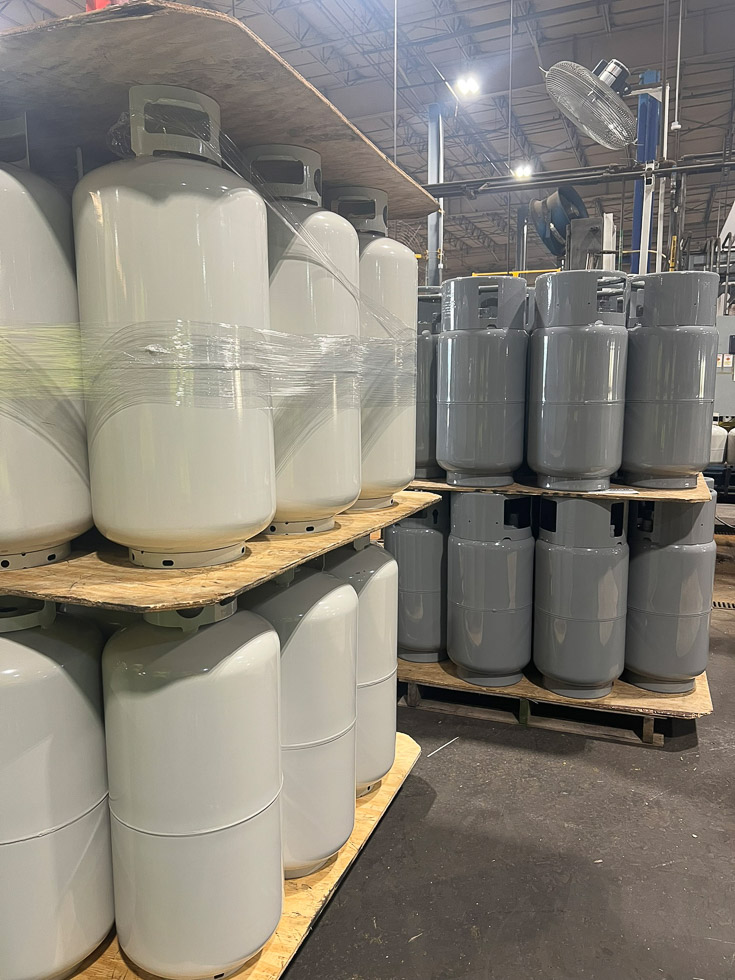
A proper inspection goes beyond confirming that a cylinder just looks acceptable. Any person filling the cylinder should first check for required markings, including:
- Service pressure
- Tare weight
- Water capacity
- Requalification markings and dates
The visual inspection should also include a thorough evaluation of the overall appearance of the cylinder. That means checking for signs of:
- Dents or damage from impact
- Corrosion or deterioration
- Leaks
- Damaged valve connections
- Fire or excessive heat exposure
- Bulges or distortion
- Unauthorized repairs or modifications
- Inappropriate attachments
Each of these conditions can affect the cylinder’s ability to safely contain pressure and should be evaluated in accordance with applicable codes and standards before filling.
Pay Close Attention to Where Moisture Gathers
Inspection points that deserve extra attention are areas where moisture can collect, such as on the bottom or foot ring area of a cylinder, around the collar or under a lid — just to name a few.
Moisture can sit in some of these less obvious locations and cause corrosion over time. That’s why inspection should not be limited to just the most visible surfaces of the cylinder. Understanding cylinder construction and locations prone to deterioration is very important.
Understanding All Guidelines for Proper Filling
After the prefill inspection, the filler should verify that required valves and safety devices are present and in acceptable condition. During the fill process, employees need to ensure the cylinder is not overfilled. This is important because propane can expand as its temperature increases, so adequate vapor space must remain within the cylinder.
Additionally, an overfilling prevention device (OPD) should never be treated as a reason to intentionally overfill or as a substitute for proper filling procedures. Where an OPD is required, the cylinder should not be filled unless the required device is installed and functioning as intended. Cylinders should only be filled by weight or volume. Once the cylinder is filled, it is important to ensure the valve and connection area is free of any leaks before it is ready to be put in service.
Safety Is a Shared Responsibility
All pressure cylinder manufacturers are required to design and produce cylinders to meet stringent regulatory requirements. Once in the field, it is up to marketers to ensure cylinders are inspected, handled, maintained and filled throughout each cylinder’s service life. Safety relies on everyone to do their part in the process.
Everyone in the industry has an opportunity to prevent incidents by taking a few additional moments to perform a complete inspection and refusing to fill cylinders that do not meet safety requirements.
The guidance in this article does not replace a thorough understanding of regulatory requirements. Please refer to NFPA 58 Liquefied Petroleum Gas Code, 2024; Compressed Gas Association C-6 Standard for Visual Inspection of Steel Compressed Gas Cylinders; and the Propane Education & Research Council’s PERC Education Program Module — Inspect Portable Cylinder (from the PERC Learning Center).
OUR DIGITAL PARTNERS