
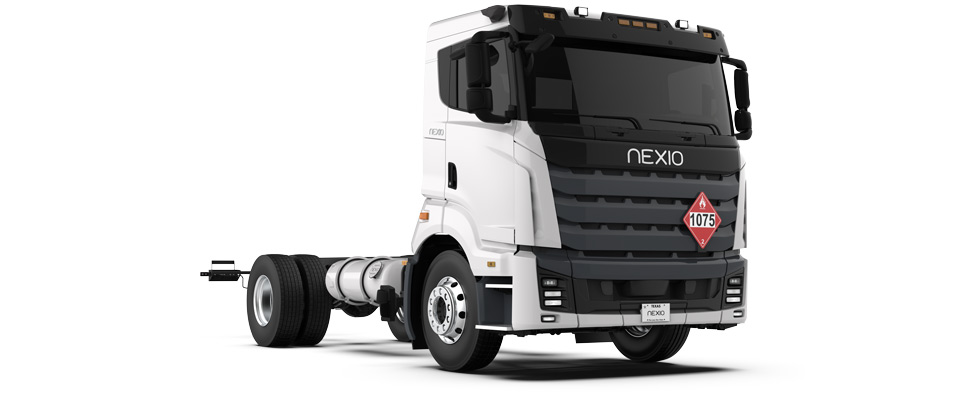
Nexio’s Bobtail Adds New Potential for Propane-Powered Engines
Getting propane engines on the road in industry fleets
The propane delivery sector is no stranger to the topic of propane-powered fleets, and part of the ongoing discussion is wider adoption within the industry. Every propane company has different needs, but some are considering the benefits of demonstrating propane’s value and environmental friendliness through powering their own fleets by the very fuel they sell.
With these discussions come new ideas and innovations to consider while making decisions for the future. To give an understanding of the benefits of these offerings and learn how they’re of value to the industry, Jeremy Lessaris, chief marketing officer for Nexio, shared about the company’s propane-powered bobtail — not only about the product itself but also how the industry can embrace sustainable solutions and provide examples to consumers about propane’s vitality in the U.S. energy mix. Lessaris oversees brand strategy, commercial positioning, marketing and communications for Nexio with a focus on aligning the company’s performance, economic and emissions advantages with disciplined fleet adoption.
Nexio’s propane-powered bobtail is a commercial truck designed exclusively for propane. The company designed and manufactured a 7.2-liter supercharged propane V8 engine — not converted or retrofitted but engineered for propane.
“The goal was to deliver a truck specifically engineered for propane fleets that meets the performance, safety and reliability standards commercial operators demand,” said Lessaris. “That meant designing a clean-sheet chassis purpose-built around propane propulsion and vocational duty cycles. The powertrain is a dedicated propane architecture from block to valvetrain, with LPG-specific cylinder heads, specialized valve materials and hardened valve seats for propane longevity, and a proprietary liquid propane injection system.”
According to Lessaris, Nexio CEO Gary Winemaster and Chief Technology Officer Horace Mast saw an opportunity “to build a purpose-built propane commercial vehicle for an industry that already believes in propane as a fuel.”
Winemaster and Mast spoke directly with propane marketers at industry events about their needs, pain points and what they wanted in a truck. This led to ideas like redesigning cab steps to be wider and extended out with more distance in between, as well as illuminated footwells and high-contrast grab handles.
“It’s been an iterative process that was shaped by real-world feedback from the people who actually use these trucks every day: drivers, operators and service centers. The goal has always been simple — build not just what works, but what works best for the voice of the industry,” said Lessaris.
That voice includes drivers and considering both their safety and comfort — an aspect of utmost importance to vehicle manufacturers across the industry. In that regard, Nexio centralized its design philosophy around “Driver First” with the belief that when drivers perform better, fleets perform better. “In an industry where experienced drivers are increasingly hard to find, giving drivers a truck that feels safer, quieter and easier to operate isn’t just a feature — it’s a competitive advantage for fleets,” Lessaris explained.
Lessaris shared more about propane-powered fleets in the industry, as well as insights into Nexio’s design development process, in the Q&A ahead.
Where do you rate the current level of use of propane-powered bobtails within the industry?
Historically, the propane industry has been almost entirely reliant on diesel for its delivery fleets. There have been previous conversions and attempts at alternative solutions, but a purpose-built, OEM-manufactured propane bobtail has not been widely available commercially. The economics alone make a compelling case: meaningful annual fuel savings compared with diesel, lower maintenance costs and simplified emissions systems.
Add to that the sustainability alignment, the use of a domestically produced fuel and the fact that propane marketers would literally be delivering the same fuel their trucks run on, and the opportunity becomes very clear. We expect adoption to begin with fleets that recognize the strategic value early on. From there, growth will accelerate as the industry sees real-world performance data, service reliability and total cost-of-ownership results.
Our vision ultimately goes beyond bobtails. Across our Class 5 through Class 8 platforms, we see propane powering beverage trucks, box trucks, last-mile delivery vehicles and other commercial fleet segments. As those vehicles adopt propane, it naturally increases demand for the fuel itself — meaning more propane consumption, more deliveries and ultimately more bobtails on the road delivering it. In that sense, it creates a self-reinforcing cycle of growth for the entire industry. The propane industry should be at the forefront of that transition, and we intend to be the company that helps make it possible.
Were there any challenges the team overcame in the development process?
Building a new commercial vehicle from the ground up for the U.S. market is inherently challenging. However, this is not the first time our team has successfully introduced trucks and engines into the commercial market. Throughout development, we have relied heavily on the voice of the industry — listening to propane marketers, operators and service professionals while incorporating lessons learned through demonstrations and testing.
Challenges inevitably arise in a program of this scale, but we view them as opportunities to refine the product and ensure we are bringing the right solution to market. It is also a long process, particularly as we work through certification to the 2027 EPA and CARB standards, which are among the most demanding regulatory requirements the industry has seen. But taking the time to get it right is critical. Our focus is on launching a platform that is fully validated, compliant and ready to perform reliably in real-world commercial operations.
What moments stand out as victories for your team?
Several moments stand out to me. [The Propane Education & Research Council’s] support for our EPA and CARB certification project is also a significant milestone and an important partnership. It reinforces what the industry has been asking for and demonstrates a willingness to participate in bringing this solution to market.
The ride-and-drive events throughout 2025 have been incredible moments as well. Watching drivers who have spent years behind the wheel of diesel bobtails experience a Nexio truck for the first time and walk away genuinely impressed has been a huge moment for our team. Just as important, the feedback they’ve provided has directly influenced the evolution of the design. That kind of authentic, real-world feedback and validation is something you simply can’t buy. Along the way, we were also honored with the Global Technology Conference Innovation Award at Liquid Gas Week 2025 in Rio de Janeiro, hosted by the World Liquid Gas Association. Being recognized on a global stage among leaders from more than 70 countries reinforced that the work we’re doing to advance propane-powered transportation resonates far beyond the U.S. market.
We also started on the Lufkin, Texas, manufacturing facility this year, which is more of a proud milestone for the us. The new 36-acre site is expected to create more than 300 jobs and establish a long-term foundation for growth and manufacturing presence in the U.S.
Why should marketers and distributors embrace propane-powered vehicles in their fleets? What roadblocks exist to wider adoption?
It’s important because it’s the most authentic demonstration of the fuel the industry sells every day. If you promote propane as a clean, efficient, American-sourced energy solution, operating propane-powered delivery fleets reinforces that message. Every propane bobtail becomes both proof of concept and a visible endorsement of the fuel itself.
The business case is strong as well. Propane-powered trucks offer lower fuel costs, simpler emissions systems, reduced maintenance complexity, quieter operation and a vehicle purpose-built for the work propane marketers perform daily. It’s not just good optics, it’s good business. As for adoption, there are a lot of hurdles anytime a new vehicle platform enters the market. Fleets are accustomed to existing equipment, service networks and procurement cycles. But those challenges are solvable, and the industry is already showing interest as people see the trucks operate, experience the performance firsthand and understand the long-term economics.
Many in the industry don’t yet know that a purpose-built propane bobtail exists or that the underlying vehicle platform and propane engine architecture have proven track records in commercial service. Communication like this one with BPN help close that gap, and raise awareness. Nexio’s job is to make the transition as frictionless as possible and prove that propane-powered fleets are not just viable, but a smarter solution for the industry, today.
OUR DIGITAL PARTNERS