
Fuel Gas Detector Litigation: Impact on Odor Fade Claims — Part 3
Fuel gas detectors have become a key factor in odor fade litigation, shaping legal arguments, regulatory developments & the future of propane safety standards
Part 2 of this series in last month’s column looked at the propane industry’s response to the onslaught of odor fade litigation and emerging fuel gas detector litigation that began in the late 1980s.
Research had confirmed ethyl mercaptan as the best odorant for propane, and dosage levels were increased by 50%. Propane retailers became proactive in getting to the site of an incident immediately with appropriately skilled experts to preserve evidence and to take and test samples of propane from the affected tank. And, with the Propane Education & Research Council (PERC) in the lead, the industry dramatically improved the quality of consumer safety information provided to customers.
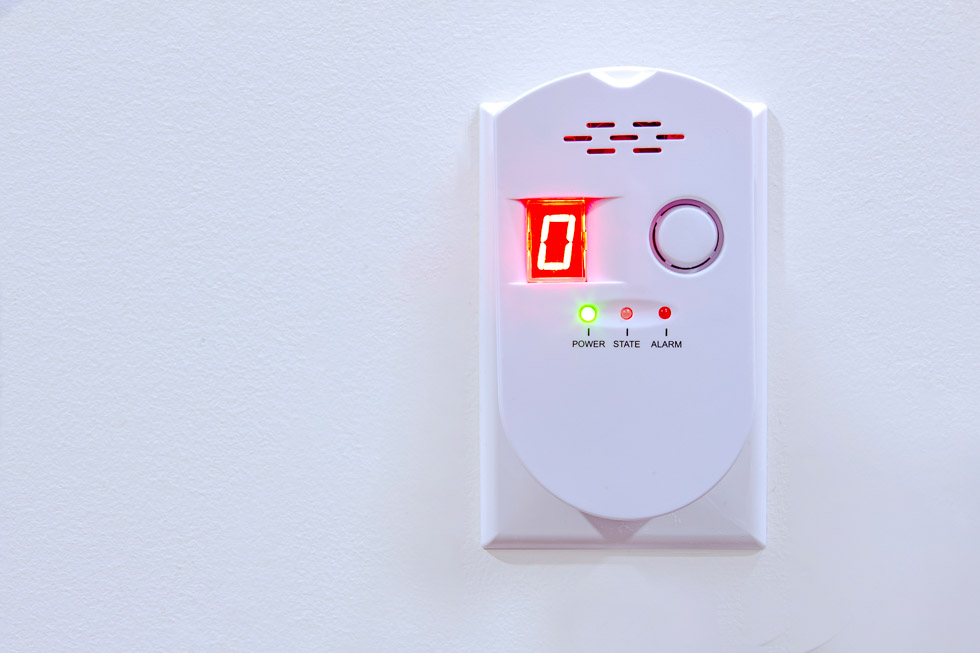
However, plaintiffs’ lawyers and their experts had one more card to play in this battle over propane odorization: the fuel gas detector. This month’s column, the last in a three-part series, will discuss the development of the residential fuel gas detector, the evolving detector technologies being used and the role of the detector in today’s changing litigation environment.
The First Detectors
The story of the residential fuel gas detector begins in Japan. In the 1960s, Japanese researchers discovered that in the presence of a wide variety of hydrocarbons, including propane and methane (natural gas), the electrical resistance of tin oxide is reduced. They developed a tin oxide sensor that was used in the first version of a residential fuel gas detector. When hydrocarbon gases contacted the sensor, an alarm would sound. The first such detector was sold in Japan in 1964 by New Cosmos Electric. Starting in the 1970s and early 1980s, use of these detectors became more widespread in Japan.
By the early 1990s, plaintiffs’ lawyers and their experts in the United States had incorporated the fuel gas detector into their arsenal of arguments against the propane industry. Because of the alleged “deficiencies” of the odorant warning system, it was essential, they claimed, that detectors be installed in consumer homes to provide a second or back-up warning of a gas leak. Without the installation of detectors in a customer’s home, the propane sold to the customer was “defective and unreasonably dangerous.” Propane suppliers, they argued, should not sell propane to customers who did not have one or more detectors installed in their homes. And, of course, the safety literature distributed by suppliers must, they claimed, strongly encourage customers to have detectors installed in their homes.
False Alarms
In the 1980s, residential gas detectors were not readily available to consumers in the United States. However, over the next several decades, this changed dramatically. As building codes were widely amended to require the installation of carbon monoxide detectors, detector manufacturers began producing combination devices. These used electrochemical sensors for carbon monoxide and tin oxide sensors for propane or natural gas. Today, such devices manufactured by First Alert and others are readily available in virtually any hardware store.
But fuel gas detectors using the tin oxide sensor have a serious flaw. They are prone to frequent false alarms because they react to virtually any hydrocarbon, not just propane or natural gas. So, a wide variety of substances such as cleaning products, aerosol sprays, cooking fumes and alcohol vapors can set them off. Perhaps for this reason, among others, consumer and regulatory acceptance of fuel gas detectors has been slow.
Regulatory Resistance
In 1983, Underwriters Laboratories (UL) did issue a standard (UL 1484) to establish testing and certification requirements that detector manufacturers must meet in order to have their products “UL-listed.” On the other hand, the U.S. Consumer Product Safety Commission studied both carbon monoxide detectors and fuel gas detectors in the 1990s. It strongly recommended the installation and use of carbon monoxide detectors (building codes across the country now require them), but it declined to recommend fuel gas detectors, concluding that it found no evidence that they improved consumer safety.
The National Fire Protection Association (NFPA) has also consistently rejected attempts to incorporate a detector mandate into NFPA 54.
In the 1990s, the state of Montana experimented with requiring the installation of gas detectors with automatic shutdown devices for locations with below-grade-level installation of propane appliances. If the detector sensed gas, then gas supply to the building would be shut down. This requirement lasted for a few years but was withdrawn after a wave of false alarm incidents.
PERC Assistance
However, none of this stopped plaintiffs’ attorneys from suing propane retailers on the claim that they should have recommended and even installed fuel gas detectors in customer locations. Although some cases have been settled under the threat of such claims, I am not aware of any adverse jury verdict in the country on the claim that a propane supplier should have installed detectors in all customer locations or should have conditioned the sale of propane on the installation of detectors. I am certainly well aware of defense verdicts rejecting such claims.
And propane suppliers have again had a big assist from PERC. From the beginning, PERC customer safety literature has featured a prominent discussion of fuel gas detectors and their potential role in providing an extra level of safety to customers. I can personally attest that this literature has been well accepted by juries and has played a role in obtaining favorable defense verdicts.
Legislation on the Horizon
The litigation climate looks good, but as readers of this column are aware, over the last decade the climate has been changing. Two things have happened. First, several high-profile incidents resulted in legislation requiring the use of fuel gas detectors. In 2014, a devastating natural gas explosion occurred in the East Harlem neighborhood of New York City, killing eight and injuring more than 70. And in 2019, a propane explosion in Farmington, Maine, killed a firefighter and injured seven people.
Both incidents prompted legislation. In 2016, the New York City Council enacted Local Law 157, requiring fuel gas detectors in all buildings with gas piping or gas-burning appliances. Enforcement was delayed until such time as a national standard for the installation of detectors was developed. This happened in 2022, when the National Fire Protection Association published NFPA 715. (This code does not in itself require the use of detectors — it merely sets standards for placement and manufacture.) New York City then issued its own installation rules and set a compliance deadline of May 1, 2025. This has now been extended to Jan. 1, 2027, due to “availability issues.”
In 2020, in response to the Farmington incident, the Maine Legislature enacted a statute requiring the installation of fuel gas detectors in every room of a building containing an appliance fueled by propane or natural gas. It took effect in 2022. To date, Maine and New York City appear to be the only jurisdictions that have enacted fuel gas detector mandates. However, it has been reported that Illinois may enact such a requirement later this year. Legislation is also pending in several other states.
To date, all legislation has placed responsibility for the installation and maintenance of fuel gas detectors squarely where it belongs: on the property owner. The industry needs to be watchful to make certain this does not change as new laws are passed.
Changing Technology
A second factor in the changing legal climate is new technology. New Cosmos Electric, the Japanese company that originally marketed detectors based on the tin oxide sensor, is now marketing a different type of detector. Instead of tin oxide, this product uses a different sensor, known as a micro-electromechanical system (MEMS). New Cosmos says that the MEMS sensor, which apparently includes a filter cap over the sensor, “virtually eliminates false alarms.”
This appears to have been confirmed by 2018 testing at the Gas Technology Institute. The New Cosmos detector is set to alarm at 10% of the lower flammable limit, with a loud voice message in English and Spanish warning of a gas leak. It is battery powered, with a 10-year battery life.
Currently, the New Cosmos detector is designed to detect only methane (natural gas). However, the company says that it will be coming out with a product designed for the propane market later in 2026.
Not surprisingly, New Cosmos has been aggressively lobbying legislatures around the country in favor of legislation mandating the use of fuel gas detectors. One tool in its arsenal is to move quickly to promote detectors in the immediate aftermath of a bad gas explosion incident. We can expect this to continue, with more states and local jurisdictions adopting requirements similar to those of New York City and Maine. In this process, the industry needs to be vigilant to make certain that the full responsibility for installation and maintenance remains with the property owner.
OUR DIGITAL PARTNERS