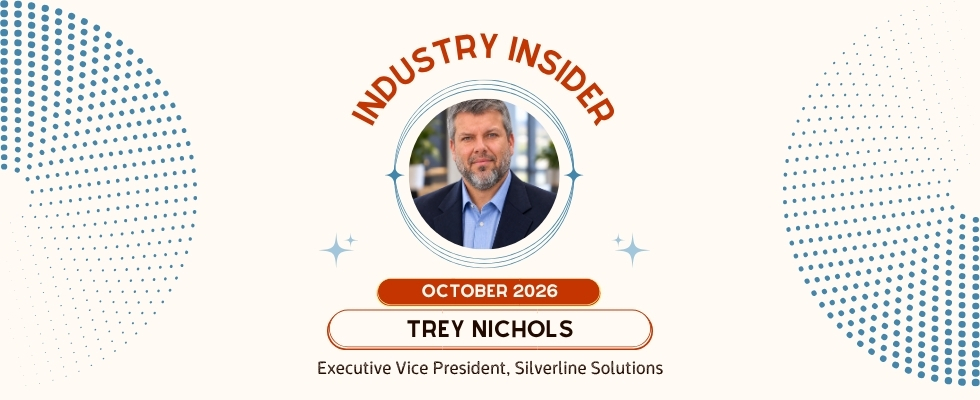
Meet Trey Nichols, Executive Vice President of Silverline Solutions
Trey Nichols shares insights on leadership, cybersecurity and the evolving role of technology in the propane industry
Trey Nichols, executive vice president and co-founder of Silverline Solutions, shares his perspectives on leadership, cybersecurity and the evolving role of technology in the propane industry.
Describe your role in the company.
As one of the co-founders and a member of the leadership team at Silverline Solutions, I work across many different aspects of the company. A big part of my role is making sure everything we do stays aligned with our mission, core values and commitment to providing exceptional service. I speak with customers regularly, which gives me a direct understanding of the challenges they are facing and where technology can make a meaningful difference in their businesses. I also play a significant role in the software and product side of Silverline. I spend a lot of time identifying opportunities where technology can improve efficiency, profitability and overall operational performance for propane and fuel companies.
How did you get your start in the propane industry?
I had been out of college for about a year and was working in IT for a newspaper and large commercial printing company … let’s just say a few years ago. Then, completely out of the blue, I received a call from a petroleum company serving Virginia, North Carolina and Tennessee asking if I would be interested in managing their IT. To this day, I’m not sure I ever found out how they got my name, but I’m certainly glad they did.
What do you think would surprise someone about the work you do?
Just how industry-specific our work really is. From the outside, it can look like we simply provide software solutions and IT services like cloud hosting, cybersecurity, IT support and so on, but in reality, the work goes much deeper than that. To support a propane company well, you have to understand how the business operates. That means understanding dispatch, deliveries, customer service, trucks, communications and how all of those areas affect one another. Technology touches nearly every part of the operation, so when something changes or fails, the impact can extend far beyond IT. If you don’t understand the industry and how those pieces connect, even a seemingly small technology decision can create significant operational disruption.
What advice do you have for someone coming into the industry?
My advice would be to listen, learn and build relationships. One of the greatest strengths of the propane industry is its people. There are so many knowledgeable, experienced professionals who have spent years serving their communities and I have a tremendous amount of respect for them. Take the time to learn the business from the people who do the work every day. You can learn something from everyone … from drivers and CSRs to dispatchers, service technicians, managers and owners. There is an incredible amount of institutional knowledge in this industry, and the more you listen, the more you begin to understand how all the pieces fit together.
Who has been the strongest influence on your career to date?
Tim Hutchens of Hutchens Petroleum certainly has to be one of them. He gave me my start in this industry, but more importantly, he taught me a great deal about leadership, the importance of the customer experience and the idea that while financial performance matters, it doesn’t always have to be the primary force driving every business decision.
My business partner, Daniel Grotjan, has also had a tremendous influence on me. He has reinforced how much the small details matter and has helped me become a better leader in many ways. It’s also incredibly valuable (and rare) to have a person and business partner who shares the same core values and approach to how a company should operate. And finally, Matt Hall had an influence on me from a young age by showing me just how important relationships are. That lesson has stayed with me throughout my career and continues to shape how I approach business today.
How would you describe your leadership style, and how does it contribute to the success of your team?
I’ve always described myself as a servant leader because I want to empower people to be the best version of themselves. I also think my leadership style is very collaborative, curious and pragmatic. I try to listen first, ask questions, challenge assumptions and give people room to bring their own ideas and expertise to the table. I want people to have real ownership of what they do and to feel comfortable speaking up, challenging the status quo and bringing forward new ideas rather than simply being “yes people.”
Some of our best ideas come from people who are willing to question how something has always been done and look for a better way. At the same time, empowerment has to come with clear direction, honest feedback and accountability. Daniel and I take our mission, core values and the way we do business very seriously. We want our people to have freedom in how they work, but we also want everyone to understand the principles that guide our decisions, especially our commitment to our customers and to one another.
For me, good leadership is finding that balance: being available as a resource, removing obstacles, helping people grow and giving them room to succeed, while still making sure the entire team is rowing in the same direction.
What or who motivates Trey Nichols?
The “what” and the “who” are really intertwined for me. My family has always been a major driving force in my life, and they continue to motivate me in everything I do. Our employees at Silverline are another big part of that. I want Silverline to be a place where people feel like they are part of something meaningful, where they have the opportunity to succeed, grow and truly thrive.
Our customers’ success motivates me tremendously. Nothing drives me more than knowing our customers are protected, supported and well taken care of. I love hearing their success stories, whether they come from the software we’ve developed, the cloud hosting we provide or the support our team delivers every day. Knowing that our work has made a real difference in someone’s business is incredibly rewarding.
What’s your funniest or favorite work memory?
I have so many meaningful (and sometimes pretty crazy) work stories. One of the funniest, and maybe a little revealing (pun intended), happened years ago when I was attending a technical users group conference with Tim Hutchens for the petroleum software we were using at the time. There were probably 50-75 people there, mostly IT professionals, and at about 2:30 in the morning the hotel fire alarm went off. Everyone rushed outside into the parking lot. Tim looked around and pointed out that everyone else had taken the time to get dressed and make themselves somewhat presentable.
I, on the other hand, was standing there in my underwear and a T-shirt, holding my laptop like it was a newborn baby.
The next day, when everyone was talking about it, we realized I was apparently the only person who had even thought to grab any of their IT equipment on the way out. Tim told me that was the moment he knew he had hired the right IT person! One of my favorite memories, though, is designing our data center with Daniel. We spent countless hours going over every detail and practically every square centimeter of the building because we wanted everything to be perfect for both our customers and our employees.
There were times when the contractors we hired, that specialize in design and building infrastructure for hospitals and other critical operations, would tell us we could save money or that we really didn’t need to take resiliency as far as we were taking it. But our answer was always the same: we were building this to protect the customers who help provide for our families. Their success is our success. That mindset has stayed with us and continues to influence how we make decisions today.
What is one technology or cybersecurity issue you think propane companies should be paying more attention to?
Wow — this is a loaded question because there are so many areas propane companies need to pay attention to. But if I had to choose one, I would say cybersecurity education and awareness for employees. The numbers consistently show that people remain one of the biggest factors in cybersecurity incidents. In many cases, an employee isn’t doing something careless intentionally … they simply haven’t been given the training to recognize a phishing email, suspicious link, fraudulent request or other type of social-engineering attack.
You can invest in great cybersecurity tools, but your employees are still an important part of your defense. Companies need to continually educate their teams on what threats look like, what they should and shouldn’t do, and what to do when something doesn’t feel right. Cybersecurity should really become part of the culture of the entire organization.
As technology continues to change the way propane companies operate, what development or opportunity are you most excited about for the industry’s future?
The easy answer would be to call out AI — but none of us really know where that is going to take us right now (or the dangers it poses as well). What excites me most is seeing more companies recognize the value of using their data to make smarter, faster business decisions. There is a tremendous difference between looking at a report at the end of the month after everything has already occurred versus having near real-time insight and the ability to drive meaningful change. That kind of agility through visibility can have a real impact on efficiency, profitability, customer service and overall performance.
The real opportunity is bringing information together, identifying what actually requires someone’s attention and helping people make better decisions from it. AI, predictive analytics and operational intelligence will certainly play a role in that future, but they need to be implemented thoughtfully. There is a lot of excitement around AI right now, and understandably so, but companies also need to consider security, privacy and how these tools are being used.
How would you spend an unexpected day off?
What’s a day off? I’m kidding, of course. If I had an unexpected day off (and assuming my wife didn’t hand me a honey-do list) I’d probably take my family and my dogs somewhere that has a trail or boardwalk beside the water to where we could just enjoy spending time together and have a nice meal together. That sounds like a pretty perfect day to me!
OUR DIGITAL PARTNERS